I bought a pair of Hokas One One Rincons at the Syracuse Fleet Feet last July; they were. brand new model at the time, light, sleek, affordably priced, and as it turned out, an interesting choice for a first pair of shoes.
As is my wont, I spent hours pouting over shoe reviews and recommendations, reading about midsole construction, heel to to drop, cushion, and weight. Though I’m no longer riding, like many cyclists, I was fascinated by the technology of the sport, and I indulged my inner gearhead in my search for what would become the first of . . . many . . . pairs of running shoes.
This was how I learned about the Hoka brand, a relatively new and polarizing player who’s heavily cushioned, maximalist shoes were shaking up the running world. As a 51 year-old who hadn’t run since high school, the thought of extra protection sounded appealing.
I hadn’t narrowed my decision down to any one brand when we visited Fleet Feet in DeWitt, but the Rincon, an attractively simple shoe, caught my eye. That it was reasonably priced was a bonus, as summers are tighter times than most for adjuncts, and the shoe’s feathery weight made it even more intriguing.
But it was the ride that sold me; a quick sprint down the store’s test track revealed a shoe that was light, responsive, fast, and well-cushioned. What’s more, I felt as though the shoes were pushing me forward; it was an odd yet compelling sensation. These shoes make you want to run fast.
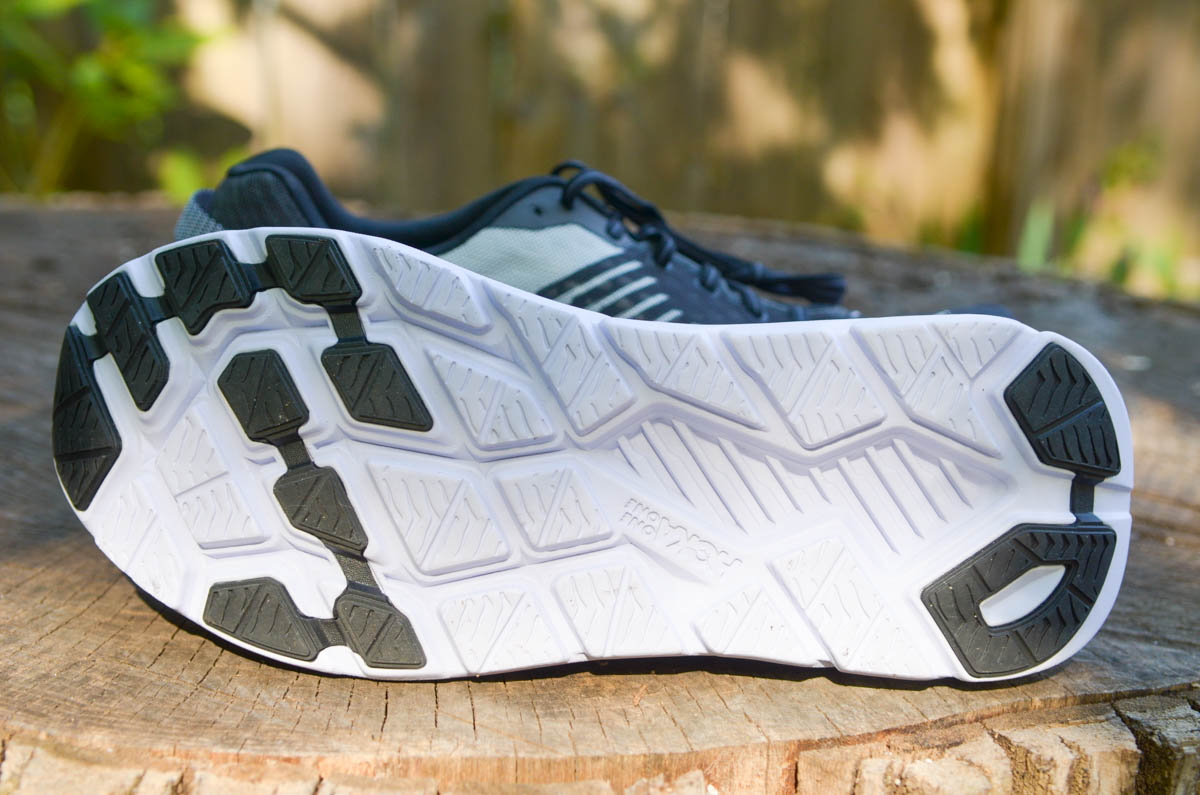
The shoe’s light weight was partially due to the limited amount of hard rubber on the outsole; this gave me pause, but not enough to prevent me from walking out of the store with a pair of powder blue and yellow Rincons.
Initial Experiences
The Rincon, like other Hokas, is a low-drop shoe. The heel is 5mm higher than the toe, as compared to the 10-12mm drop on traditional running shoes. A deep discussion of the biomechanics benefits of low drop shoes is beyond my pay grade, but runners and walkers accustomed shoes with traditional drops might want to transition slowly into their low or no drop shoes.
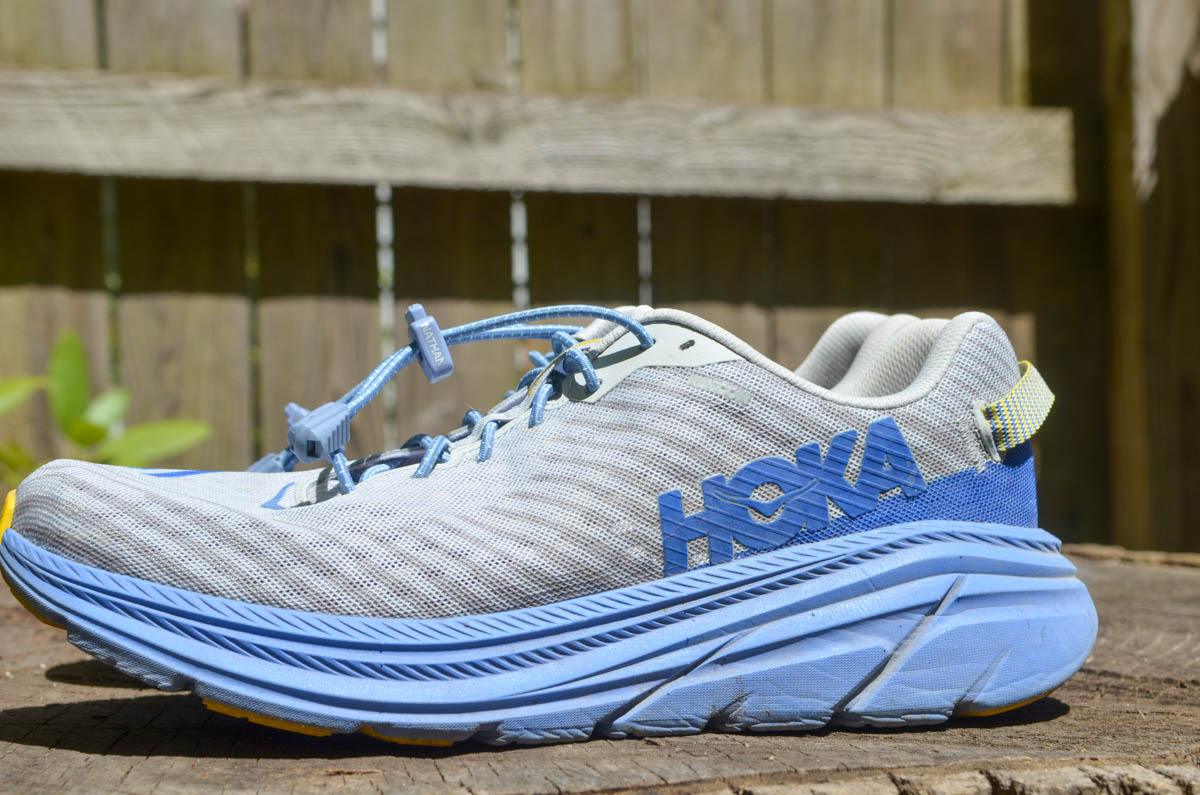
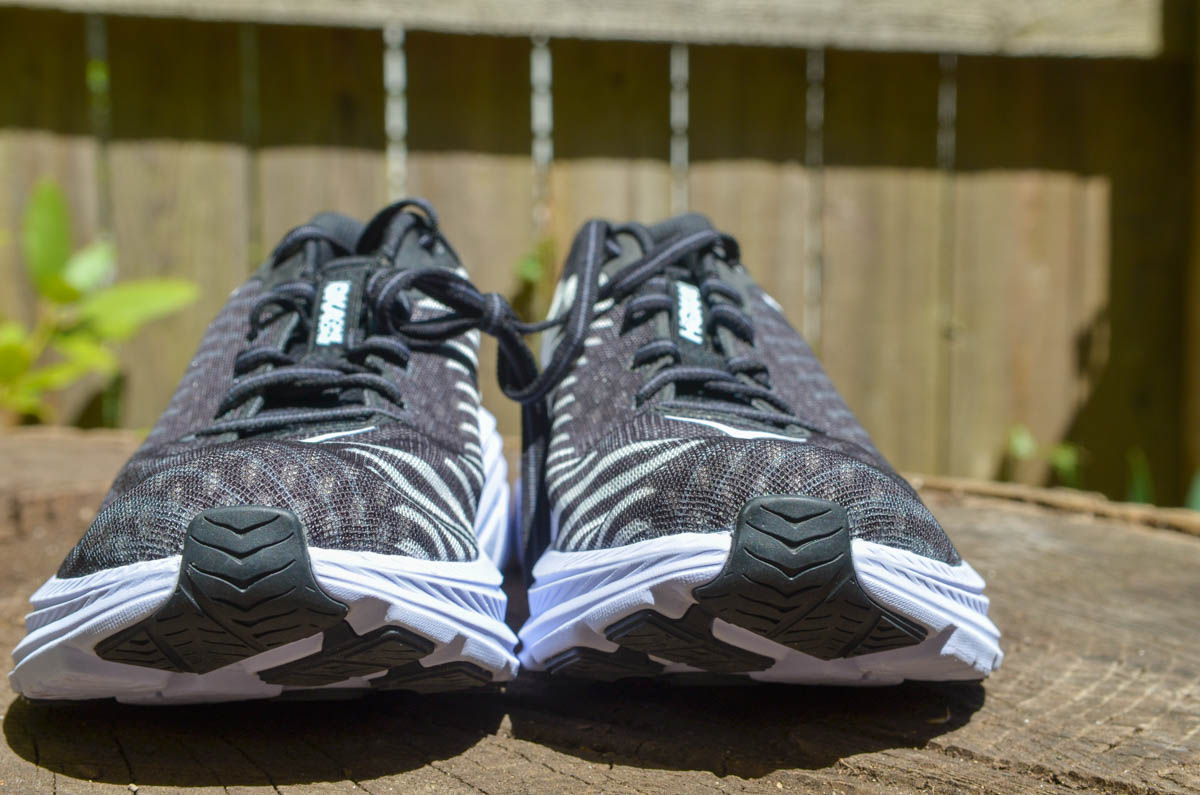
The front of the shoe has a pronounced rise as part of the meta rocker system.
I speak from experience; I was just taking up the sport, but I’d been speed walking in a pair of Asics with a more traditional profile, and I ended up with some leg and hip pain initially, though much of that came from running a bit too fast and far without giving my bones and joints time to adjust to rigors of running; Saucony, New Balance, and Asics all make low-drop shoes, and runners looking to transition to a new geometry should break their legs in over a period of some weeks.
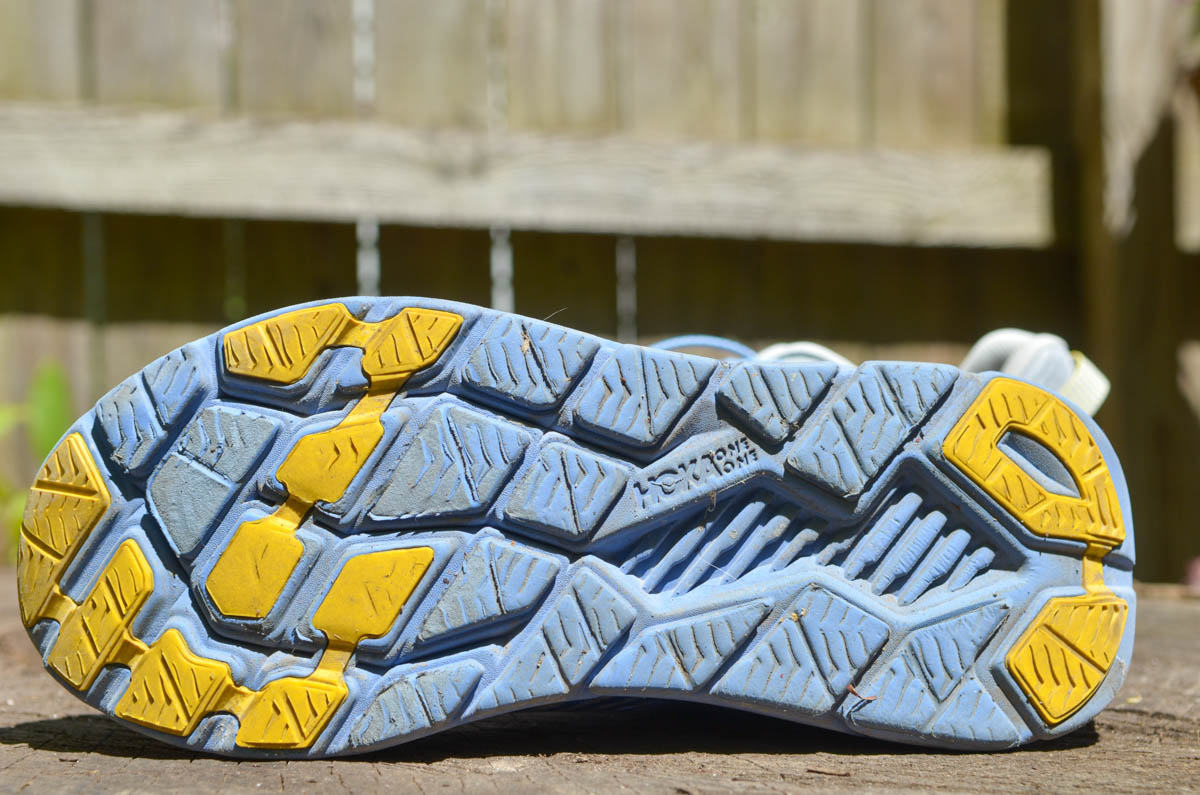
Most of the wear is confined to the forefoot. There is actually quite a bit of rubber left, though I’m skeptical about reaching 300 miles.
My other concern was the initial amount of wear, something other reviewers noted as well. These are fast, comfortable shoes that will serve a runner well, but the limited amount of hard rubber on the outsoles tends to wear rather quickly at first before stabilizing.
I should also add that while I’m no longer a Clydesdale, at 175 pounds, I’m not lightweight either, and this obviously affects a shoe’s wear.
Technical Information
The Rincon is a neutral trainer weighing in at 15.8 ounces per pair (men’s size 10).
The shoe employs Hoka’s early stage meta rocker: in essence, the outsole is sculpted in a way that promotes a natural rolling motion. This explains my initial impression of the shoe guiding me forward. The meta rocker gives the shoe a distinctive shape, particularly in the forefoot.
The midsole composed of an EVA material, has a stack height of 32mm at the heel and 27mm in the forefoot. It’s thick, but the foot is partially surrounded by the midsole, and the shoe’s wide base compensates for the tall stack height.
As discussed before, the outsole consists of a few patches of hard rubber—and a lot of exposed EVA foam.
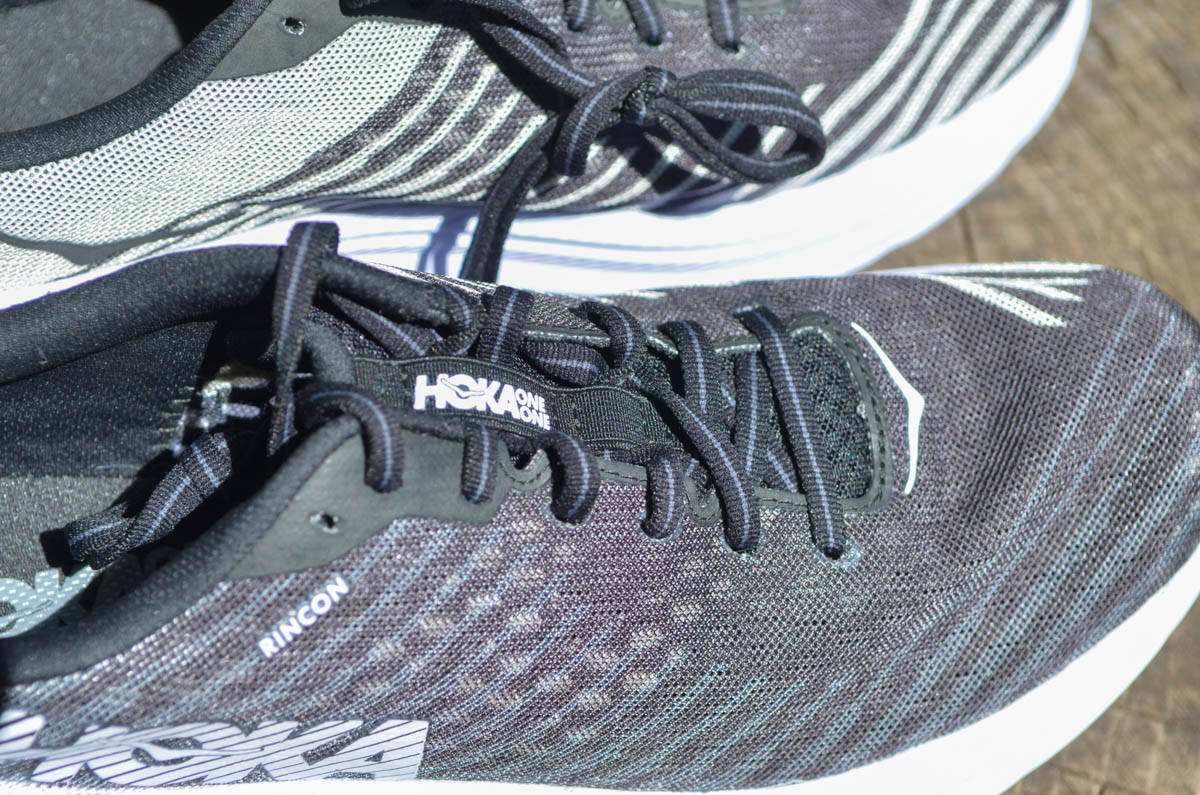
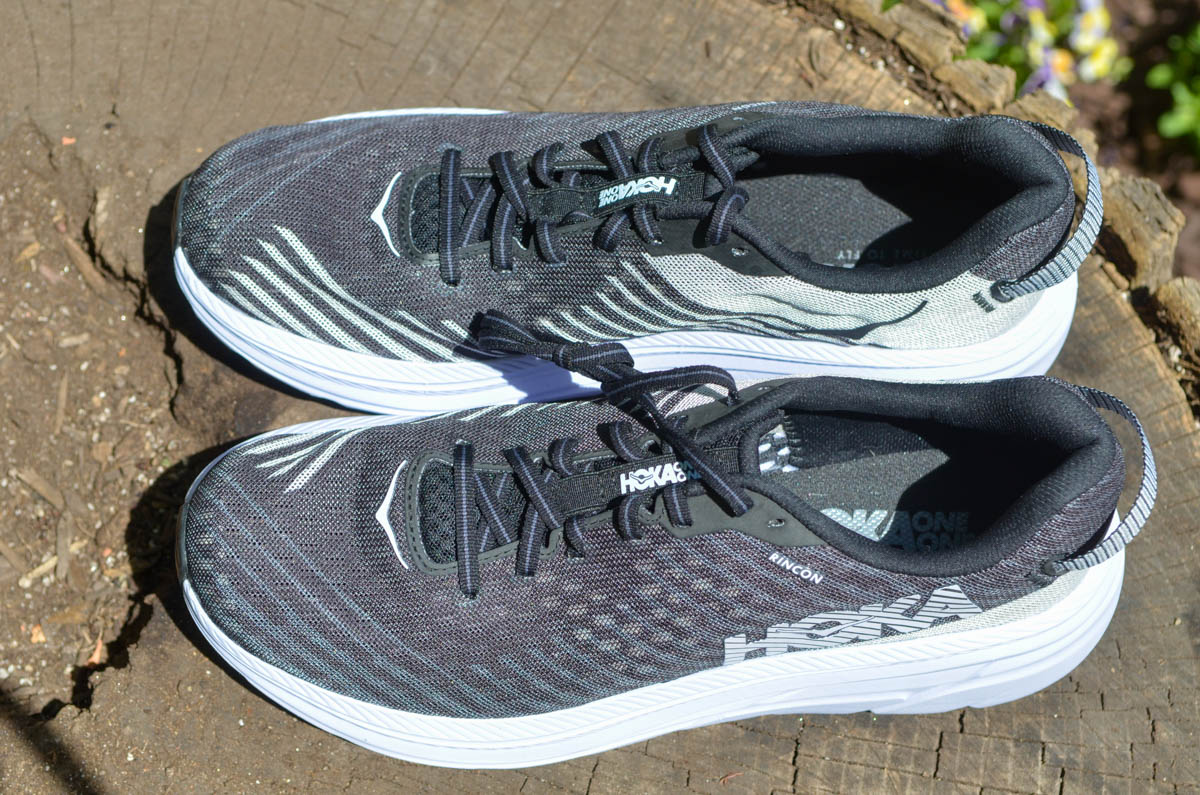
The upper is made of a thin, breathable material with plenty of perforations to promote airflow.
Finally, straps on the heel make it easier to pull the shoes on and off.
It’s worth noting that the Rincon lack mush of the reflective material seen on some of Hoka’s other models, though this isn’t uncommon with lightweight trainers.
Impressions and Best Applications
I initially mentioned that the Rincons were an interesting choice for a first (or only) pair of shoes. This is because the shoe has an interesting duality to it; on the one hand, it’s a versatile shoe that is light enough for speed work, yet comfortable enough for long runs. It’s not a bad choice for a 5K, though it really comes into its own in longer races and is ideal for half marathons.
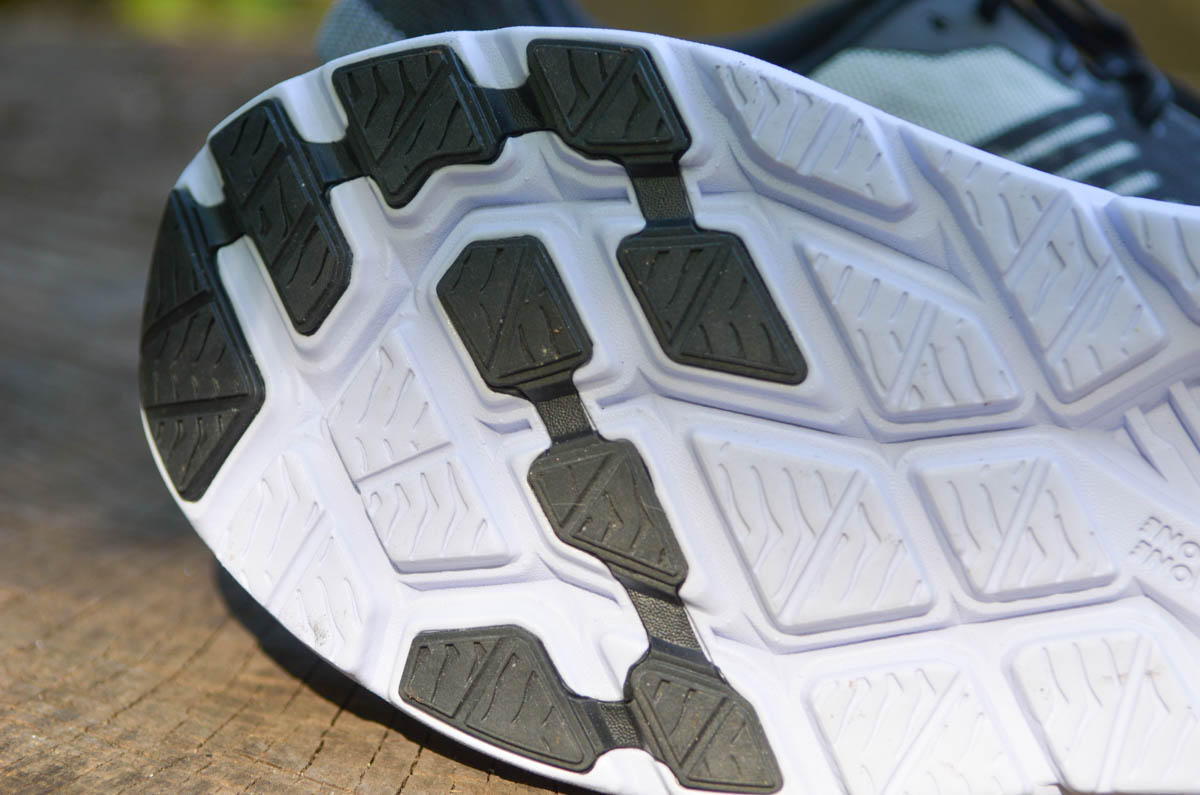
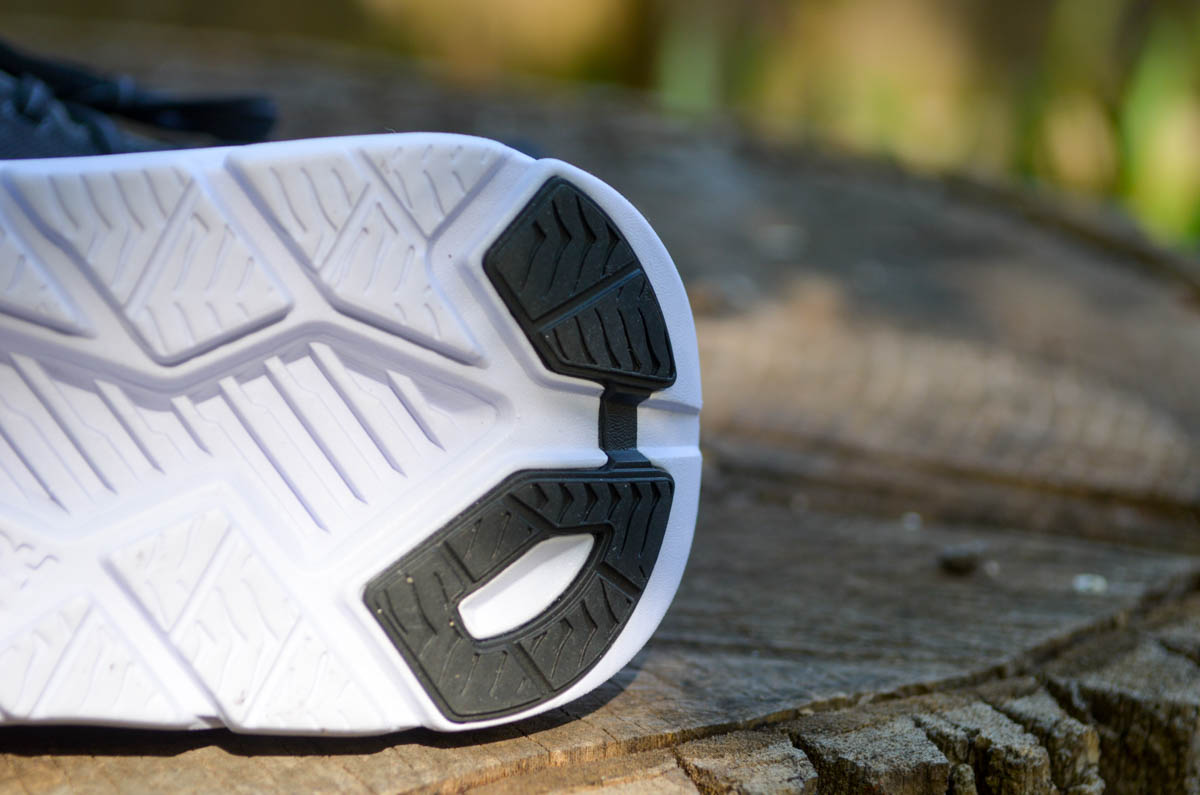
Forefoot, unworn pair.
However, while versatile, the limited amount of rubber on the outsoles means that these shoes will wear faster than daily trainers like Hoka’s Clifton, New Balance’s 880, or Saucony’s Echelon. I ended up buying heavier, more durable shoes for daily training and have used the Rincons as dedicated racing shoes, first in 5Ks, then at the Empire State 10K, and finally in the Lake Effect Half Marathon earlier this year.
The shoes are cushioned enough to be comfortable, almost plush, but light enough to be responsive. The thick midsoles are stiff and dampen out road feel, but the rocker compensates for this; like the other Hokas I’ve worn, it’s easy to keep a high cadence with these shoes.
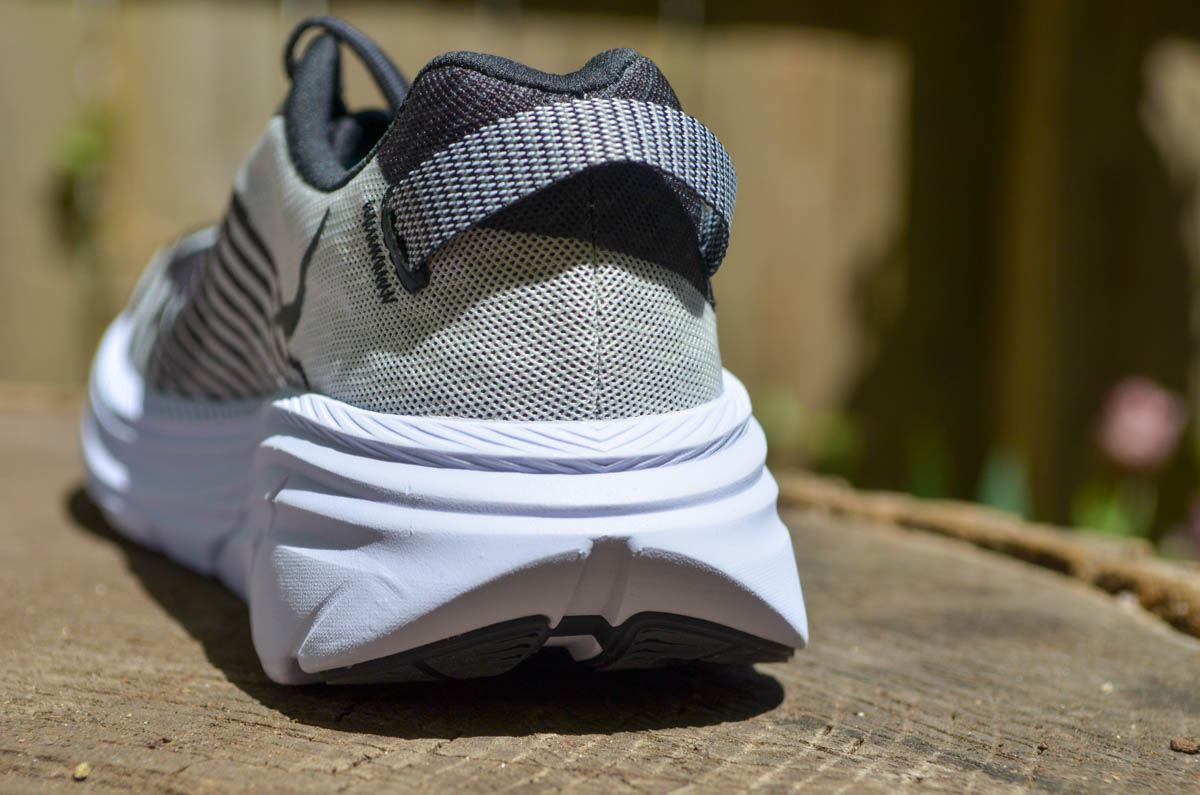
A bevelled heel is part of the meta rocker system. The loop is handy.
The upper is supremely breathable. As someone who can suffer in the heat, I appreciate the light fabric, but I paired the shoes with wool sock for a half marathon in February, and I never had cold feet in the mid 30 degree weather.
The shoes fit well; there were reports that some of the 2019 Hokas ran on the long side, but the Rincons fit comfortably without sloppiness or play. I particularly appreciate the roomy toe box. My feet aren’t wide, but they are apparently tall, particularly my toes, and dislike the feeling of fabric pressing on my toes. This hasn’t been a problem with the Rincons—or the other Hokas in my collection, for that matter.
The uppers have worn well, and while the rubber shows wear, the performance of the shoes hasn’t degraded after about 80 miles. A number of reviewers see the shoe lasting for around 300 miles, which seems reasonable, depending on a runner’s weight, running style, and the local surface.
I’ve since purchased a second pair in anticipation of future races. Given the state of affairs in May, 2020, I may be racing in these for another season or two.
Future
The Rincon 2 is set to be released soon. The mid and outsole appears to be little changed, though the offset has increased from 5 to 6mm. The shoe’s upper has seen some changes; the fabric is now denser, which may lead to even more durability at the possible expense of breathability.
Gallery
Type: neutral trainer
Uses: speed training, races (10K, half marathon)
Weight (men’s size 10): 15.8 ounces per pair
Drop: 5mm
Cost: $115
Product Site: https://www.hokaoneone.com/mens-road/rincon/1102874.html