The Hokas One One Cavu 2 is one of the least “Hoka like” shoes in the company’s lineup. It’s a simple design with a comparatively simple look, low profile, and less obviously pronounced meta rocker, meaning that the forefoot has a less aggressively “upset” look to it compared to the Rincon or Clifton. This is a fast neutral trainer, and it has become my go to shoes for 5Ks.
Technical Information
At 15.4 ounces per pair, the Cavu 2s are among the lightest shoes in Hoka’s lineup. The midsole uses Hoka’s Profly foam, which is features softer foam in the heel for cushioning and firmer foam in the forefoot for added spring. Like other Hokas, the Cavus use the meta rocker system to promote a “rolling” motion for a better toe off, though it’s less pronounced than in other Hokas, likely due to the addition of the Profly foam. The midsole is comparatively thin.
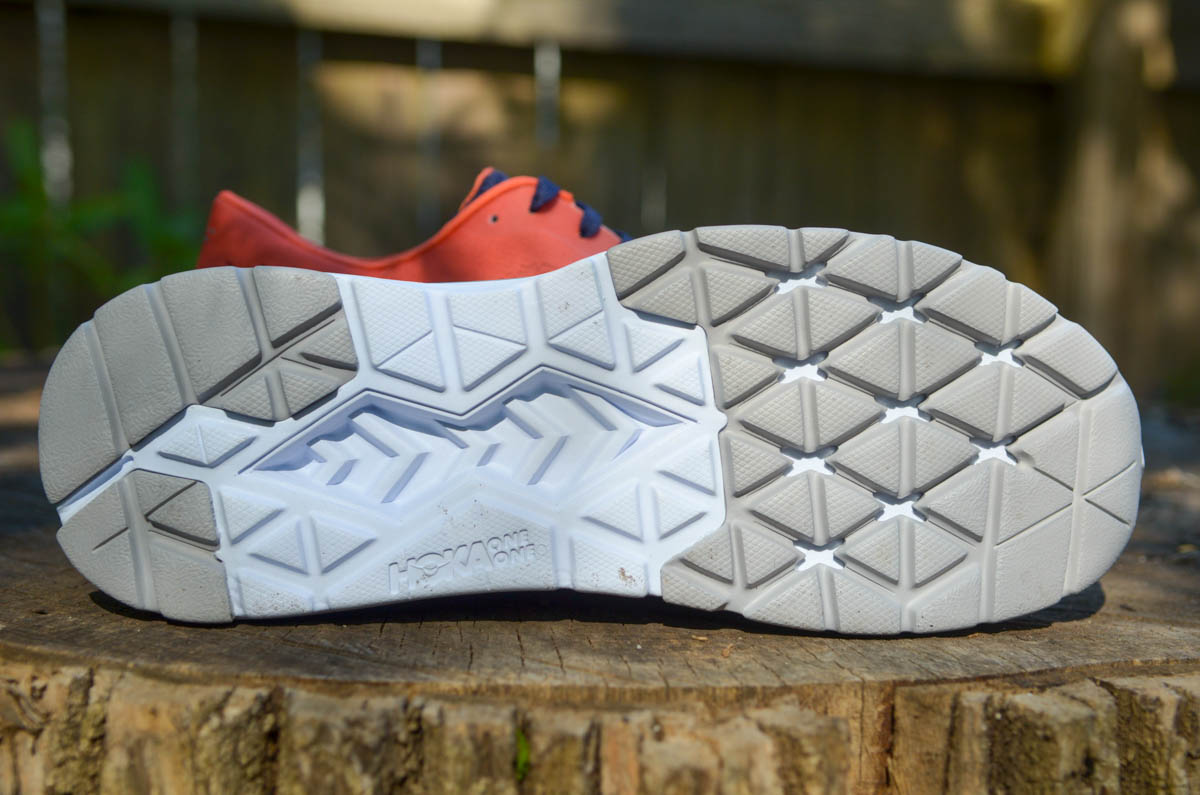
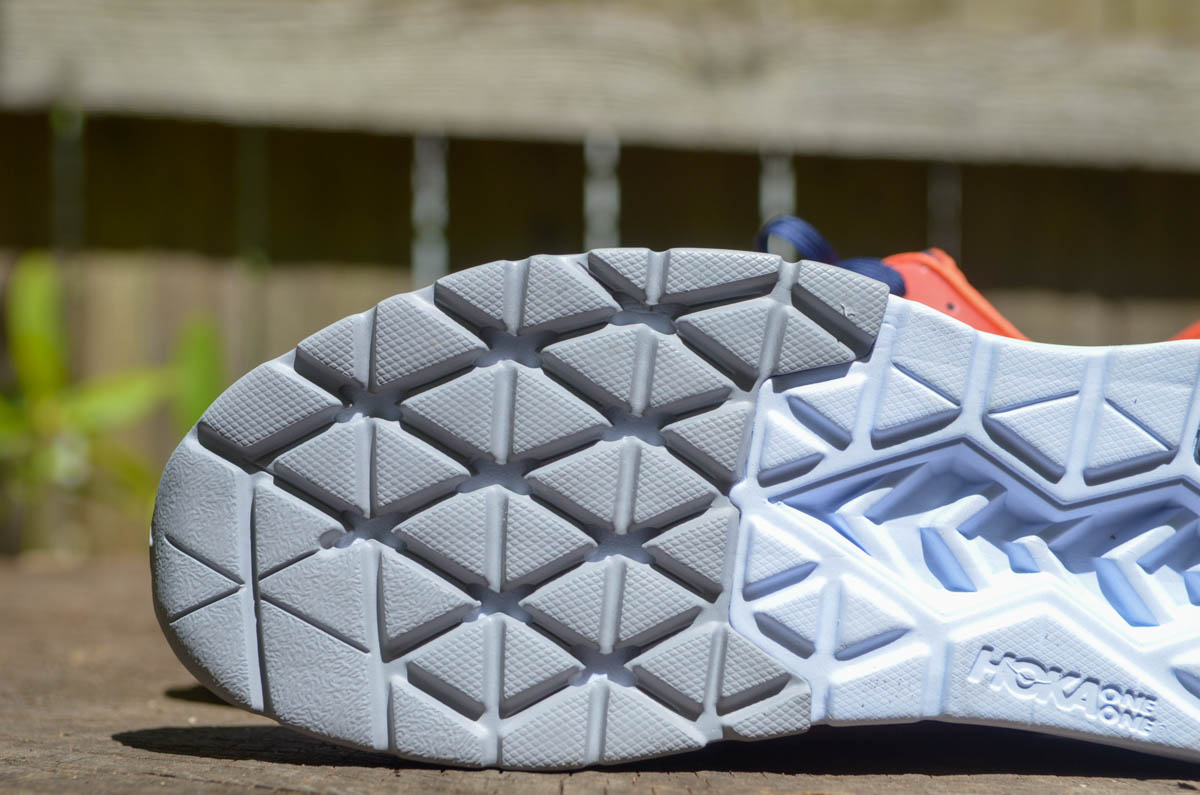
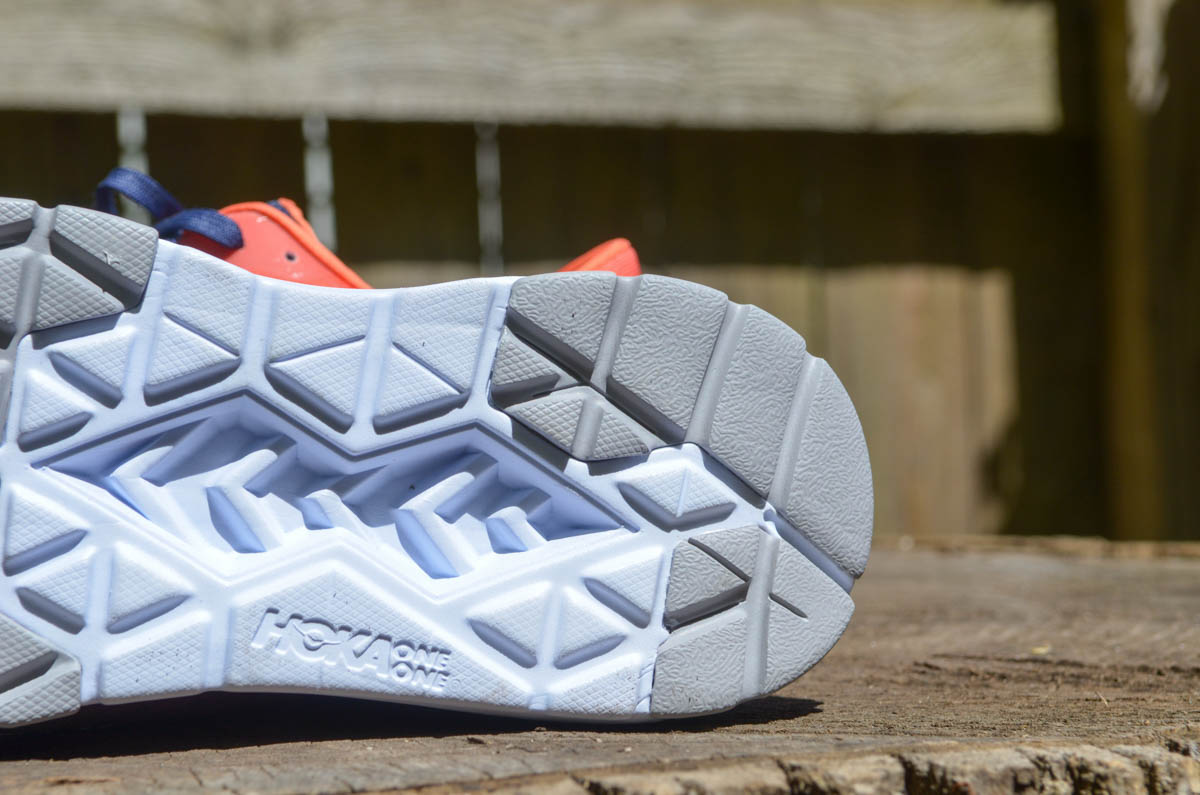
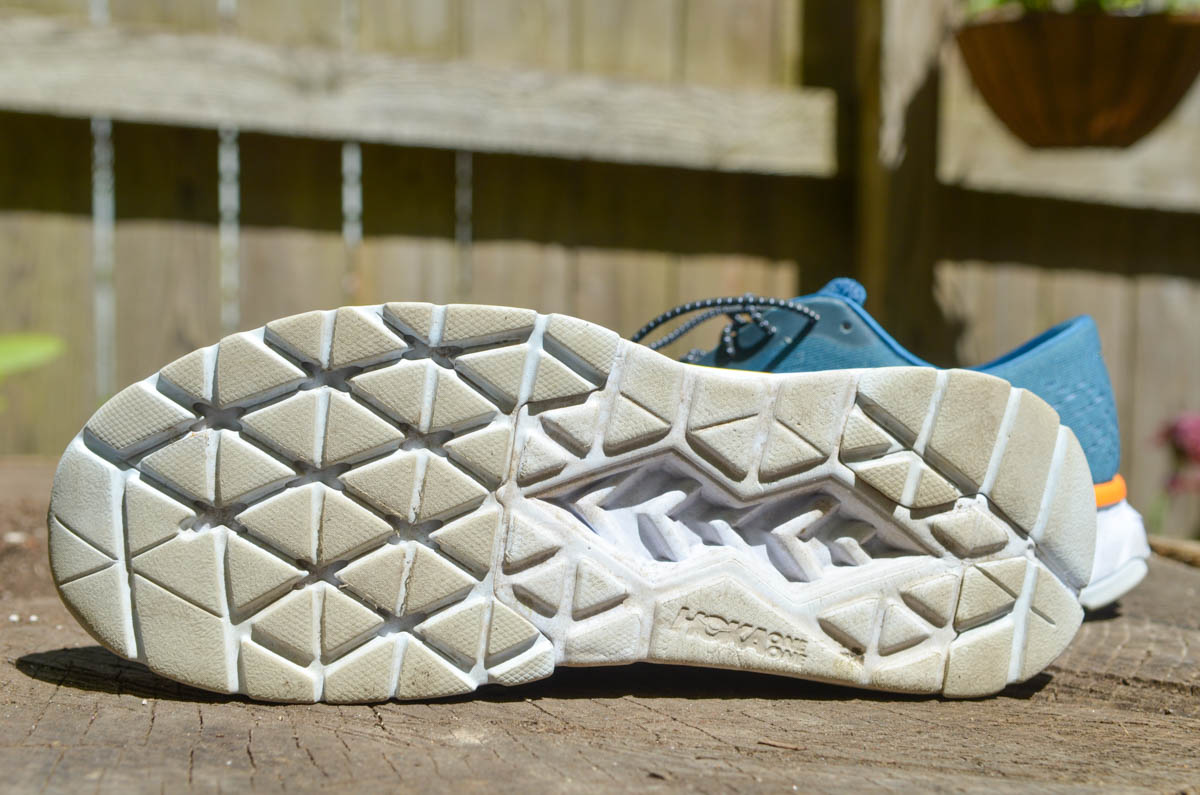
The outsole has exposed EVA with rubberized foam in high wear areas at the toe and heel for durability. The outsole is soft to the touch, which partially compensates for the thinner midsole.
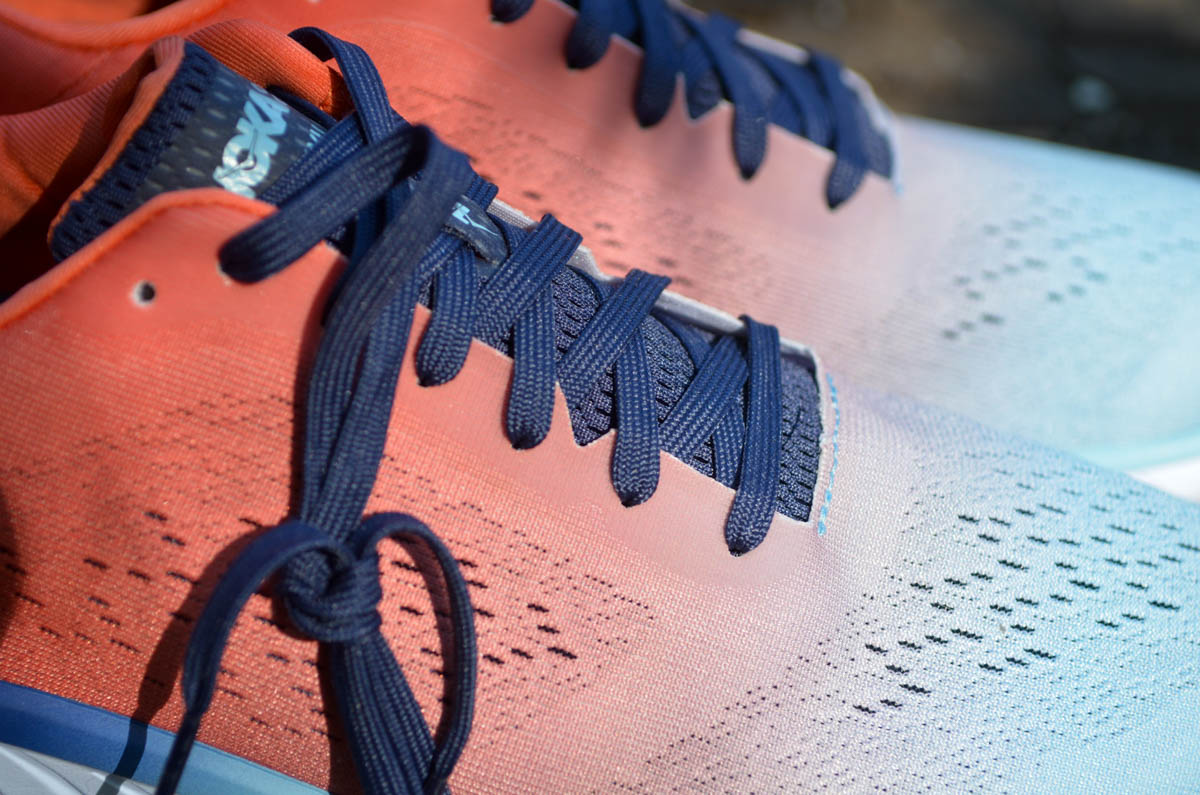
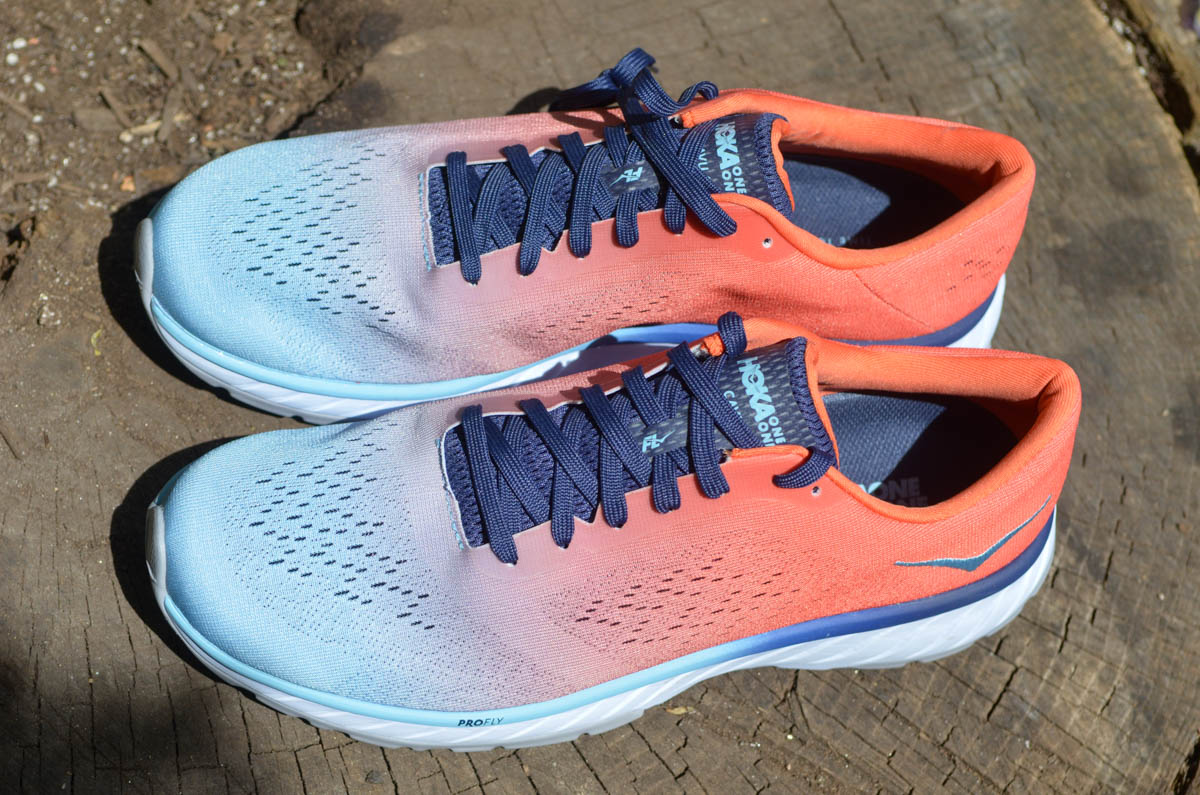
The upper consists of a light, breathable fabric with a gusseted tongue and reinforced lace holes.
Impressions and Best Applications
Based on the specs and price, it would be easy to assume that the Cavu is a direct competitor for Hoka’s own Rincon, but they’re actually very different products. The Rincon, while light and fast, has the classic Hokas high-profile look, with a thick midsole and high toe box.
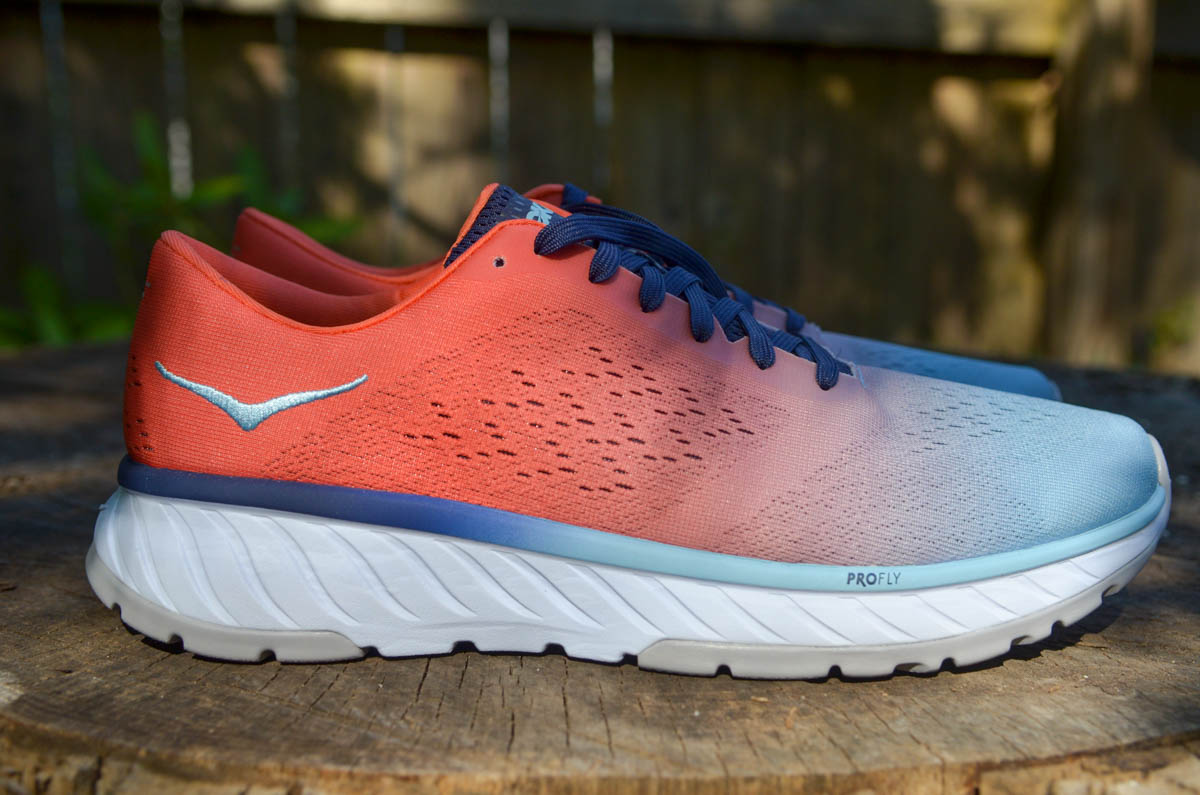
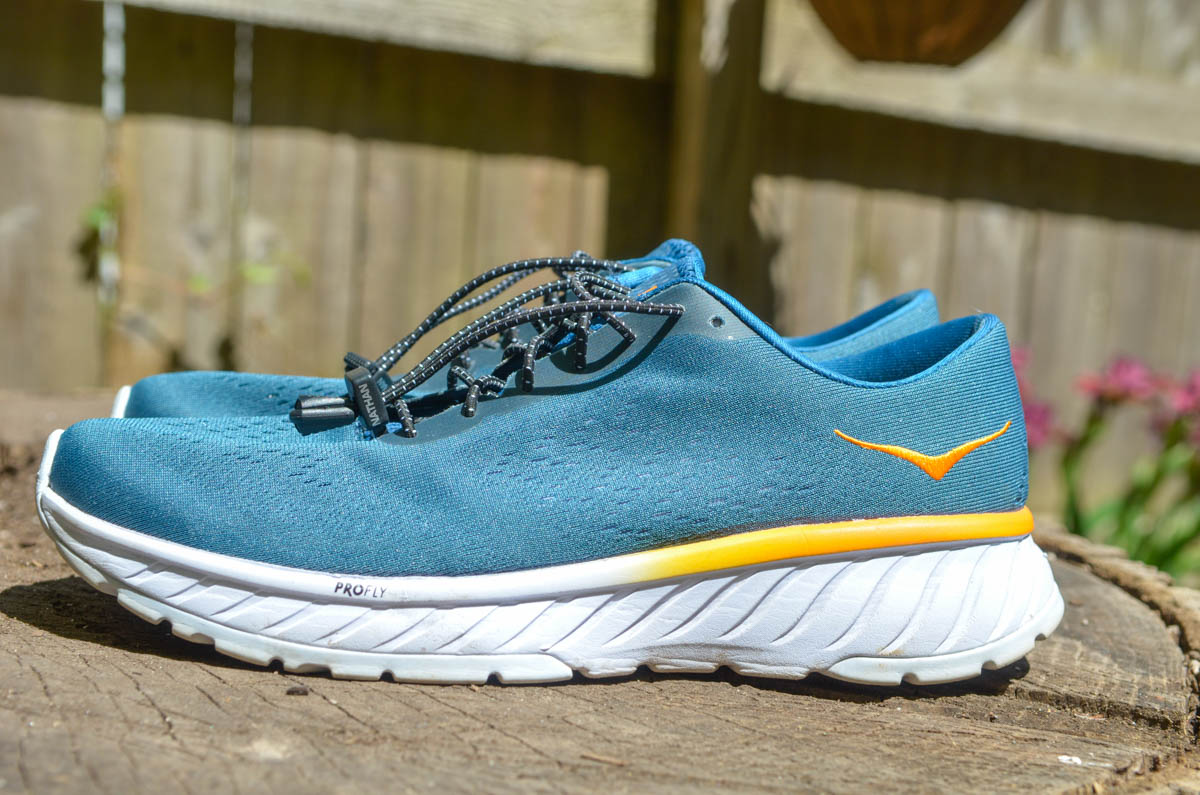
The Cavu’s clean profile.
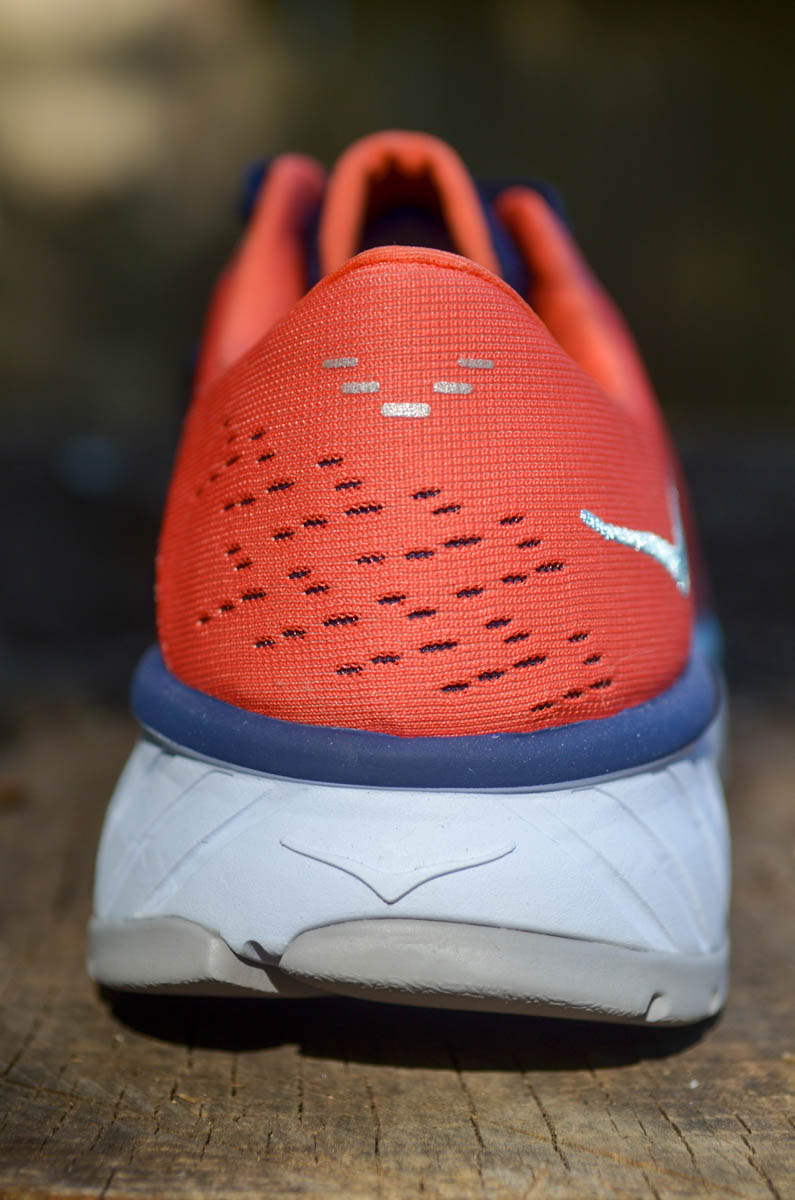
The Cavu 2 has a sleek, understated look with minimal branding beyond Hoka’s logo. The sole is thin, and the rocker is perhaps the least prominent in Hoka’s line.
The ride is noticeably firmer than the Roncon’s and far firmer than the other Hoka’s I’ve worn. This isn’t a racing flat, but the Cavu has a firm, lively feel to it; it’s is a fast, light shoe ideally suited to tempo training and racing.
While the Rincon shaves weight through the use of strategically place hard rubber in high-wear areas, the Cavu’s outsole consists of midsole material and rubberized foam; the latter covers most of the forefoot and heel. It’s a soft material that has proven surprisingly durable, though I doubt it will hold up like carbon or crystal rubber.
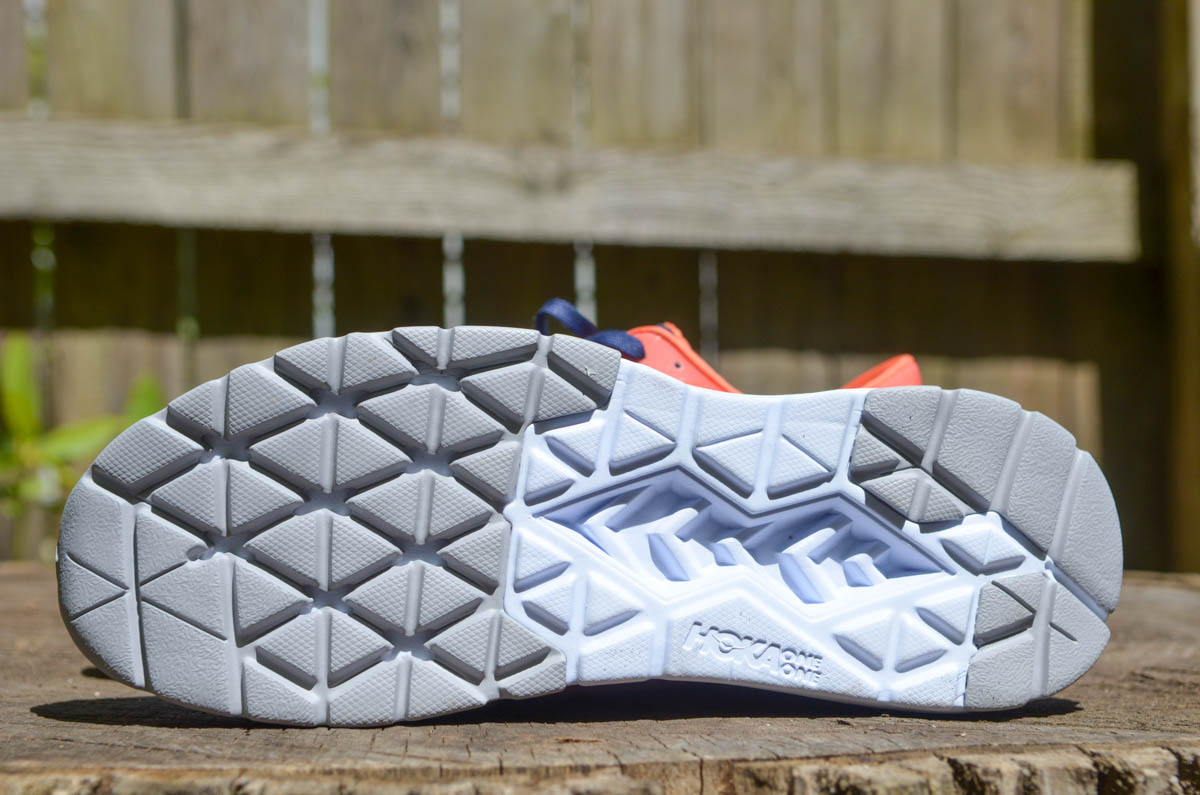
Outsoles feature a blend of rubberized foam and exposed midsole.
Like other Hokas, the Cavus is a stiff shoe that limits ground feel. The effects of the meta rocker are less noticeable, but the firmer material under the forefoot allows for a good push off.
The shoes have a firm and responsive ride; they are comfortable and compliant enough to spare your legs from a beating, but I would hardly characterize the ride as soft. That said, these would be find for longer runs and races, but I would prefer Rincons or Cliftons for half marathons.
The upper is less breathable than that of last year’s Rincon; I raced in a number of winter 5Ks with these shoes paired with wool socks, and I never suffered from cold feet. I suspect they would be fine in warmer temperatures as well.
In spite of their lower profile, I find that I have plenty of room, particularly in the toe box, but I’ve never found the fit to be sloppy. As with some other 2019 models, there were reports of some Cavu’s running on the large size.
Future
The Cavu 3 was released earlier this year, and it appears to have some fairly substantial changes, including revisions to the outsole and a more breathable upper. A few reviewers noted less room in the toe box. There was also a modest increase in price, from $110 to $120.
Runners looking for a light, fast trainer at a great price can find deals on the Cavu 2 with a bit of patience. Hoka had the shoes discounted to $74.99, but they have sold out.
Type: neutral trainer
Uses: speed training, races
Weight: (men’s size 10): 15.4 ounces per pair
Drop: 5mm
Cost: $110 ($74.99)
Product Site: https://www.hokaoneone.com/mens-view-all/cavu-2/1099723.html
Large area of rubberized foam in the forefoot. This portion of the shoe is firmer,
Rubberized foam on the heel. The exposed midsole doesn’t get much contact.
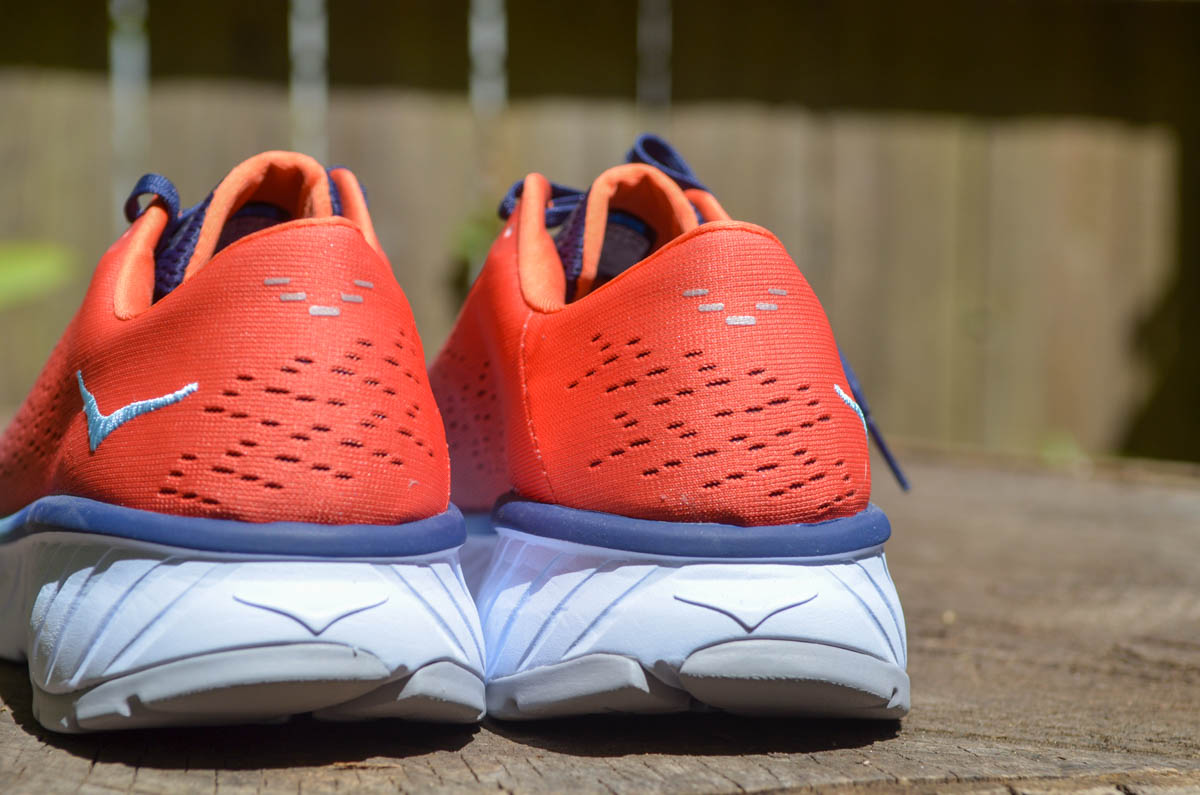
Beveled heels, part of Hoka’s meta rocker system.
Unworn pair, purchased on sale.
Original pair of Cavu 2s, with speed laces. Visible are the reinforcements around the lace holes.
The soles show minor wear.